

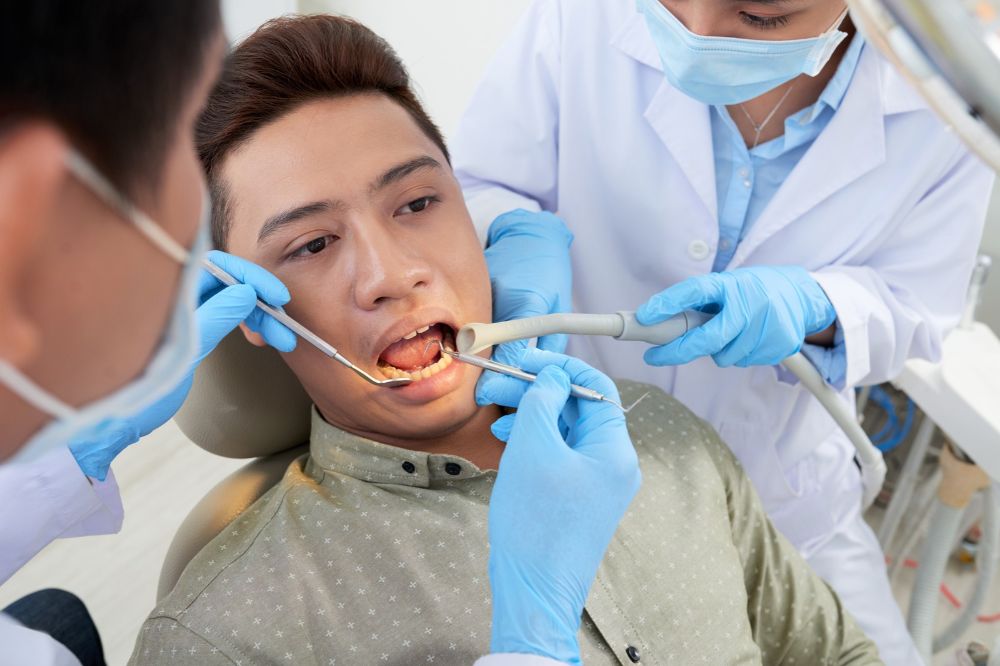
A dental filling can fall out while eating, brushing, or chewing hard food. You may notice a hole in your tooth, feel a rough edge with your tongue, or experience sensitivity to hot, cold, or sweet foods. Although a lost filling does not always require emergency care, the exposed tooth may become painful or further damaged. If this happens, stay calm and contact a dentist in Dearborn to arrange an appointment.
Knowing what to do before your visit can help protect the tooth and reduce discomfort.
Why Can a Dental Filling Fall Out?
Dental fillings near you repair teeth damaged by decay or minor breaks. However, a filling may loosen or fall out for several reasons, including:
- Normal wear: Fillings can wear down over time from chewing and daily use.
- New tooth decay: Decay around the filling may weaken the bond between the filling and the tooth.
- Hard or sticky foods: Biting hard objects or chewing sticky foods may loosen a filling.
- Tooth damage: A crack or break in the tooth can cause the filling to come loose.
- Older fillings: Some fillings may need replacement after years of use.
The right repair depends on how much healthy tooth remains and whether there is new decay or damage. A dentist can examine the tooth and decide whether it needs a new filling or another type of treatment. If you need dental fillings in Dearborn, an examination can help identify the cause and guide the next steps.
What Should You Do if a Filling Falls Out?
Taking a few simple steps can help protect the tooth until you receive dental care.
- Call a dentist: Explain what happened and describe any pain or sensitivity. Ask how soon you should be seen.
- Keep the area clean: Brush gently around the tooth and rinse your mouth with warm water to remove food.
- Chew on the other side: This helps protect the exposed tooth from pressure and further damage.
- Save the filling if you can find it: Keep it in a clean container and bring it to your appointment. The dentist will decide whether it can be used again.
- Consider temporary dental material: If you cannot see a dentist right away, a pharmacy may carry temporary dental filling material. Follow the product instructions and use it only as directed.
Do not ignore the missing filling, even if the tooth does not hurt. Contact a dental office near you to arrange an assessment.
Can I put the filling back in myself?
No. Do not try to push the old filling back into the tooth or attach it with household glue. It may not fit correctly, and glue can harm the tooth or surrounding tissues. The filling may also be dirty or damaged.
A temporary dental filling product may help cover the exposed area temporarily if used according to its instructions. However, it cannot replace a proper dental examination and repair. If you have severe pain, swelling, fever, or pus near the tooth, seek urgent dental care. Facial swelling, trouble swallowing or breathing needs emergency medical attention.
What should I eat and avoid in the meantime?
Your food choices can help reduce pressure on the tooth and limit sensitivity until your appointment.
- Foods that may be easier to eat
- Soft foods such as scrambled eggs, oatmeal, and mashed potatoes
- Yogurt and soft cheese
- Soups that are warm rather than very hot
- Cooked vegetables and soft foods cut into small pieces
Foods and drinks to avoid
- Hard foods such as nuts, ice, and hard sweets
- Sticky foods such as caramel and chewing gum
- Very hot or cold foods if they cause sensitivity
- Sugary foods and drinks may increase the risk of further decay
Chew on the opposite side of your mouth and drink water after eating. Continue brushing gently with fluoride toothpaste, but avoid pressing hard on the affected tooth.
How Soon Should You See a Dentist?
Arrange a dental appointment as soon as possible, even if you have little or no pain. A missing filling can leave the inner part of the tooth exposed, making it more sensitive and easier to damage. Treatment may involve replacing the filling, repairing a damaged area, or using a crown if the tooth needs more support.
If you have severe pain, swelling, fever, or signs of infection, seek dental care quickly. Your dentist can check the problem and recommend the right treatment.
Protect Your Tooth with Timely Dental Care!
A lost filling does not always mean you need major treatment, but seeing a dentist soon can help prevent more damage. Royal Dentistry can check your tooth, explain the repair options, and tell you what to expect. Contact the team to book your appointment and learn how to care for your tooth until your visit.
FAQs
Can a lost filling cause tooth pain?
Yes. A lost filling can expose the sensitive part of your tooth, causing pain or discomfort when you eat or drink. You may also feel sensitivity to hot or cold foods.
Can I wait a few days if my lost filling does not hurt?
It is best to contact a dentist as soon as possible, even if there is no pain. The exposed tooth may still be at risk of further damage or decay.
Will a dentist always replace a lost filling?
No. The treatment depends on the tooth’s condition. A dentist may replace the filling or recommend another repair if the tooth has a large crack or significant damage.
Can I brush my teeth after a filling falls out?
Yes. Brush gently with fluoride toothpaste to keep the tooth clean. Do not press too hard on the tooth. Rinse your mouth with warm water after eating.